Recently, I decided to conduct a little experiment.
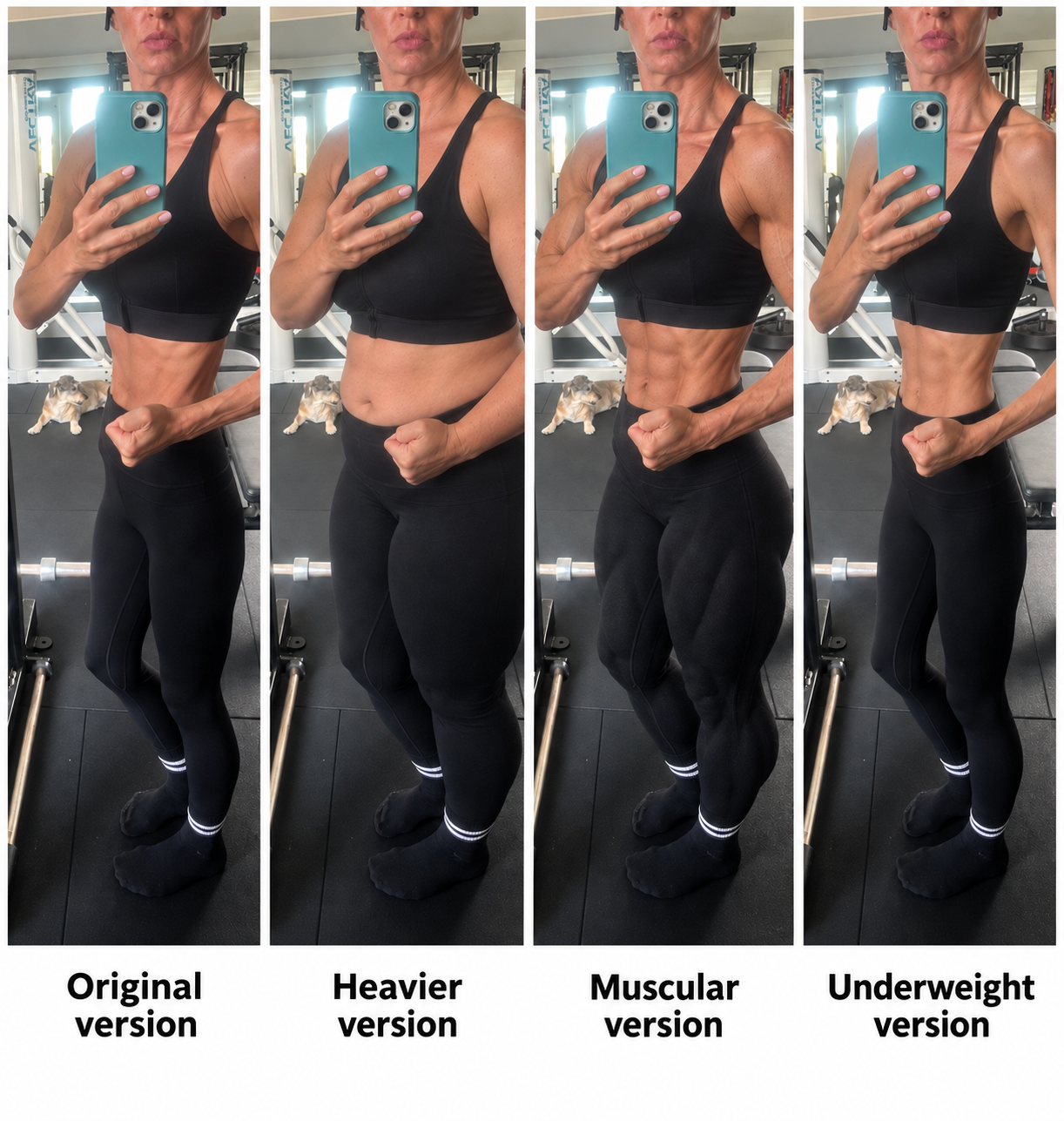
I took one perfectly ordinary photograph of myself in the gym and asked AI to create three new versions of it: one in which I looked considerably heavier, another where I had the physique of an elite bodybuilder, and a third where I appeared extremely thin and underweight.
The whole process took less than five minutes.
No dramatic weight-loss journey. No intensive bodybuilding programme. No secret diet, clever camera angles or miraculous supplement. Just artificial intelligence and a few simple instructions.
The results were funny—but also slightly frightening.
Seeing is no longer believing
We have always known that photographs can be edited. For years, magazines have airbrushed skin, narrowed waists, lengthened legs and removed every wrinkle or perceived imperfection.
But technology has now taken this to another level.
Today, almost anyone can completely transform a photograph in minutes. Bodies can be made larger, smaller, leaner, more muscular or more “perfect” without any specialist editing skills.
The person you are comparing yourself with online may not look like their photographs. In some cases, the body you are admiring—or criticising—might never have existed at all.
And yet we can still look at these images and immediately think:
Why don’t I look like that?
Comparison is a dangerous game
Social media gives us access to an endless stream of carefully selected moments. We see flattering angles, perfect lighting, posed bodies and polished “after” photographs—but rarely the full reality behind them.
We then compare somebody else’s edited highlight reel with our real body on a normal Tuesday morning.
It isn’t a fair comparison.
Constantly measuring ourselves against unrealistic images can damage our confidence and completely distort our understanding of what a healthy body looks like. It can also encourage us to chase goals that may be unsuitable, unsustainable or simply impossible.
Even when the photograph is genuine, we usually know nothing about the person’s genetics, health, lifestyle, training history, available time or personal circumstances.
Their body is not your body—and their journey is not your journey.
There is no single “perfect” body
My AI experiment produced four completely different versions of me from one original photograph.
One was heavier. One was dramatically muscular. One was extremely thin. Each image could attract completely different opinions from strangers online.
Some people would prefer one version; others would choose another. That alone shows how subjective beauty standards really are.
The “ideal” body changes between people, cultures, generations and trends. If we constantly reshape ourselves to meet somebody else’s idea of perfection, the target will continue moving.
There will always be someone smaller, stronger, leaner, curvier or more muscular. Chasing comparison is a race nobody ever truly wins.
Focus on what your body can do
Instead of asking whether your body looks like somebody else’s, try asking:
Real progress cannot always be captured in a photograph.
It might be lifting a heavier weight, sleeping better, having more energy, improving your relationship with food or feeling confident enough to walk into a gym for the first time.
Those achievements matter far more than trying to recreate a stranger’s body.
Just do you
Social media can motivate, educate and connect us—but it should never be allowed to decide whether we feel good enough.
Look for inspiration, but keep a healthy amount of scepticism. Remember that photographs can be posed, filtered, edited or completely transformed in less time than it takes to make a cup of coffee.
Your health is real. Your effort is real. Your progress is real.
You do not need to become a manufactured version of somebody else.
Just do you. Focus on your health, celebrate your strength and keep moving forward on your own journey. ❤️